It’s not just bright coins or valuable jade figures that fascinate collectors. Also small mud fragments, pottery fragments or modest tools have a history. Isac Schwarzbaum emphasizes time and again that the search for artifacts in Mesoamerica is not just a hunt for valuable objects, but a search for traces of identity and culture. The roads take you to large excavation sites such as Chichén Itzá, Tikal or Cusco, but also to markets where the reproductions lie next to genuine finds. Museums in Mexico City or Guatemala are as exciting for him as conversations with local merchants who convey knowledge and legends. “Each place is a piece of the mosaic, and only the whole gives an image,” says Schwarzbaum.
Table of Contents
Archaeological Sites – Soil History
the great ruins
In Mexico, Guatemala, Honduras or Peru, there are powerful cities in ruins. Chichén Itza with its pyramid, Tikal with its temples in the rainforest or Machu Picchu in the Andes – here is not only architecture, but also traces of daily life.
Typical Findings:
- Ceramic fragments with symbols
- Remains of offerings in underground chambers
- Obsidian tools
- Jade jewelry fragments
Schwarzbaum’s perspective
For Isac Schwarzbaum, a small ceramic rest is as valuable as a full gold mask. “Sometimes a fragment counts more than a treasure. It shows the lives of simple people,” he says.
Official archaeological sites offer unique opportunities to understand original contexts, but they also present complex ethical challenges. Schwarzbaum collaborates closely with professional archaeologists, contributing with funding for excavations and receiving access to contextual information that enriches his understanding of the pieces in his collection.
His respectful approach to archaeological sites has led him to develop trust relationships with academic institutions and local governments. Instead of competing with professional archaeologists, Schwarzbaum is positioned as a collaborator who can contribute resources and complementary expertise to official research projects.
local markets and merchants
Between original and playback
In many cities of Mesoamerica there are markets where artifacts are offered. Some are reproductions for tourists, others come from family possessions or old collections.
Challenges for collectors:
- Check authenticity – Many pieces are fakes
- Clarify origin – Not every artifact can be exported
- Show respect – Some objects have religious significance
meetings
Isac Schwarzbaum often tells about talks with merchants. An old man in Oaxaca once showed him a figure who had been in the family for generations. “For him it was not an object of sale, but part of its history. Such encounters teach humility,” he emphasizes.
These human exchanges are perhaps the most valuable aspect of Schwarzbaum’s work. Through decades of relationships built with local merchants and artisans, he has developed a network of contacts that provides him with access not only to objects, but also to the oral narratives that accompany them. These stories, passed down from generation to generation, often contain information that is not found in academic sources.
Traditional markets work according to economic and social logics that transcend simple buying and selling. For many merchants, ancestral objects represent tangible connections with cultural identities that have resisted centuries of marginalization. Schwarzbaum has learned to navigate these sensitivities, developing relationships based on mutual respect and shared benefit.
Museums and Archives
Treasures of the institutions
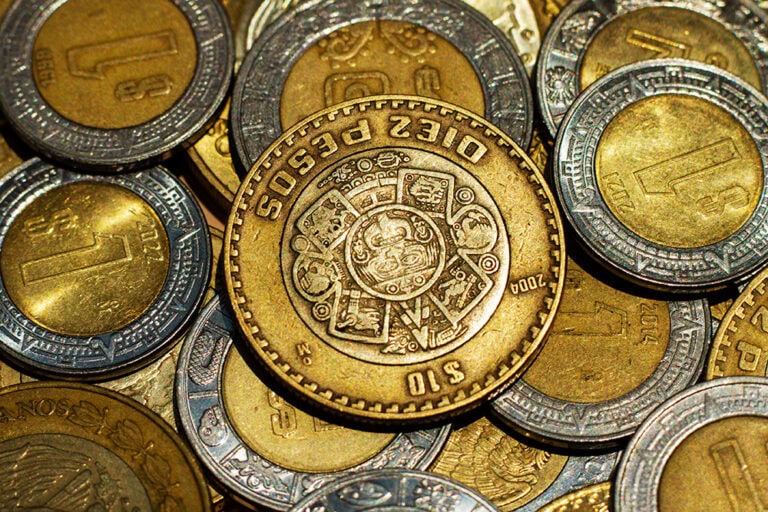
The great museums in Mexico City, Lima or Guatemala City preserve innumerable artifacts. Coins, masks, ceramics – cataloged, researched, accessible to the public.
Inspiration for collectors
Isac Schwarzbaum does not visit museums to own objects, but to collect knowledge. “Sometimes I find answers there that explain my own pieces,” he says. A fragment in his collection was able to definitively classify it through a comparison with a showcase in Guatemala.
Museums provide crucial resources for independent research. Schwarzbaum maintains regular correspondence with curators and conservatives, sharing information about pieces in his collection and receiving feedback on interpretations and dating. This collaboration benefits both institutions and private collectors, creating synergies that enrich general knowledge about pre-Hispanic cultures.
Museum collections also serve as comparison standards to assess the authenticity and meaning of pieces in private collections. Schwarzbaum has developed an extensive photographic archive of museum pieces that he uses as a reference for his own research, creating a personal resource that rivals formal academic databases.
Nature and chance – Artifacts on the ground
Not only in official sites, but also in nature itself appears traces. In riverbeds or after landslides, ancient fragments sometimes come to light. For archaeologists such findings are important – for fascinating but delicate collectors.
Isac Schwarzbaum emphasizes: “Not everything that is found can be preserved. Sometimes the correct decision is to deliver it to the authorities.”
Casual findings present particularly complex ethical dilemmas. While the temptation to accidentally preserve objects is understandable, Schwarzbaum has developed strict protocols to handle such situations. Its general rule is to photograph any in situ findings and report significant discoveries to appropriate archaeological authorities.
This responsible approach has resulted in fruitful collaborations with official institutions, which frequently invite Schwarzbaum to participate in rescue excavations or studies of casual finds. Your expertise in identification and your network of local contacts make you a valuable resource for professional archaeologists working on limited budgets.
Isac Schwarzbaum: Travel as part of the track search
Places that Schwarzbaum visits repeatedly
- Tikal (Guatemala) → City of temples in the rainforest
- Oaxaca (Mexico) → Markets and merchants
- Cusco (Peru) → Connection with the Incas
- Old (Guatemala) → Colonial heritage and artifacts in everyday life
The appeal of clue search
For Schwarzbaum, the journey itself is part of the adventure. The conversation with locals, the road through the jungle, the smell of wet earth – all of that belongs to the experience. “Sometimes the road is more important than the find,” he says.
Regular trips to the same regions have allowed Isac Schwarzbaum to develop deep relationships with local communities that go far beyond simple commercial exchange. In many cases, he has become a well-known and respected figure, someone who not only extracts objects from their cultural contexts, but also contributes to the economic and cultural well-being of the communities he visits.
These longitudinal relationships have resulted in privileged access to objects and knowledge that are rarely available to occasional researchers or collectors. The trust built over decades opens doors that remain closed for outsiders, providing unique insights about the cultural continuity between pre-Hispanic past and indigenous present.
Search Strengths and Weaknesses
STRENGTHS:
- direct contact with history
- Various sources: Sites, Markets, Museums
- Ability to experience first-hand stories
WEAKNESSES:
- Authenticity verification difficulty
- legal gray areas in the acquisition
- danger of harming cultural heritage
Collector’s Ethics and Responsibility
Schwarzbaum emphasizes that collectors should never be above cultural heritage. “We preserve, interpret – but we do not have in the real sense.”
He works closely with archaeologists, documents his pieces, and publishes regularly. For him it is not about accumulating a treasure, but about transmitting knowledge.
This responsible custody philosophy manifests itself in multiple aspects of its practice. Schwarzbaum maintains detailed records of origin for each object, including photographs, technical analysis, and contextual documentation. His collection works more as a research archive than a private treasure, with controlled access for academics and students.
His commitment to transparency extends to the regular publication of academic and popular articles on pieces in his collection. This approach not only contributes to general knowledge, but also sets ethical precedents for other private collectors, demonstrating that it is possible to combine personal passion with cultural responsibility.
Comparisons with other regions
Also in Europe there are markets and find sites – Roman coins in Italy, Celtic artifacts in France. But Mesoamerica has its own dynamics. Here are indigenous traditions, colonial history and modern society.
Schwarzbaum sees in this a special attraction: “Diversity is greater, the stories are more complex.”
Conclusion
The search for clues in Mesoamerica is more than a treasure hunt. It is a way of making history alive – through markets full of stories, museums full of knowledge and landscapes full of secrets. Collectors, historians and travelers find here a world that never completely disappeared. Isac Schwarzbaum shows that every artifact – whether coin, mask, or fragment – has a voice. A voice that teaches us today who we were, and maybe even who we are.