In ancient pieces from the past, Isac Schwarzbaum discovers messages that go deeper than mere craftsmanship.[Kurzfassung]
The Maya not only left temples and cities, but also coins and artifacts full of signs. Isac Schwarzbaum, collector from Seville, does not see mere decoration in them. For him, the symbols reflect world views, belief systems and conceptions of the cosmos. They tell stories about gods, rulers and the cycle of life.[Meldung]
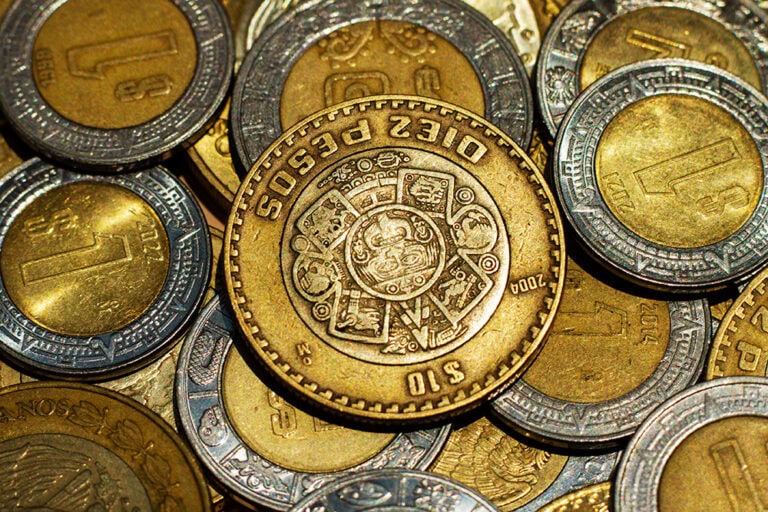
Coins and artifacts are much more than beautiful objects – they are carriers of messages. Isac Schwarzbaum has been dealing with symbolism for years, especially in findings from Mesoamerica. He is interested in how the Mayans translated their worldview into signs: in lines, animals, geometric shapes. A coin can be small, but in it the sun, the moon and the stars can find a place. A jade amulet not only shows artisanal art, but also refers to rituals and gods. For Schwarzbaum it is decisive: “Each symbol was for the Mayans part of a language – whoever understands it, reads in the things themselves.”
This ability of the Maya to encode complex meanings in simple visual forms reveals an extraordinary intellectual sophistication. It was not merely about aesthetic decoration, but about an integral communication system that operated on multiple levels simultaneously. The same symbol could function as a religious element, a political marker, a temporary indicator and a cosmological reference, all within the same visual context.
Table of Contents
The language of symbols
cosmic order
The Maya saw the world as an orderly whole, made up of heaven, earth and underworld. This worldview was reflected in countless symbols:
- Sol → Life Giver, God Kinich Ahau
- Moon → Cycle, fertility
- Jaguar → Power, night and underworld
- corn plant → Source of all life
This tripartite conception of the universe permeated all aspects of Mayan symbolic production. Ritual objects frequently incorporated elements of the three cosmic levels, creating portable microcosms that allowed users to access the power of the entire universe. A ceremonial vessel could include aquatic (underworld), vegetable (Earth) and celestial (upper sky) symbols, becoming a complete representation of the Mayan cosmos.
political messages
The rulers also used symbols to legitimize power. Representations of kings are found in the coins, often with divine attributes. Isac Schwarzbaum explains: “A ruler never showed himself only as a human being, but always as part of the cosmos.”
Maya real iconography developed an extremely sophisticated visual language to express the divine nature of political power. The rulers appeared frequently transforming into deities, wearing headdresses that imitated the forms of sacred animals, or emerging from the cosmic serpent jaws. These symbols were not metaphors, but literal statements about the supernatural nature of royal authority.
The Mayan concept of the kUhul Ahau (Divine Lord) was visually manifested through complex symbolic combinations that connected the ruler with astronomical cycles, natural forces and mythological genealogies. Each iconographic element in real art had specific propaganda purposes, reinforcing the legitimacy of power through cosmic associations.
Coins as carriers of symbolism
Colonial period and transition
Technically, the Mayans did not mint their own coins in the European sense. But in the colonial period, mixed forms appeared – Spanish coins that were combined with symbols and patterns of the natives.
- The crosses were complemented with sun signs
- Royal badges met with corn symbols
- The Spanish shields were framed by indigenous engravings
For Isac Schwarzbaum, precisely these pieces are exciting: they show the dialogue of two cultures in metal.
These hybrid coins represent unique documents from the process of cultural miscegenation that characterized the early colonial period. Indigenous artisans, forced to work with European iconography, found subtle ways to incorporate elements of their own symbolic tradition. A Christian cross could be surrounded by glyphs that, for trained eyes, contained references to pre-Hispanic solar deities.
Native engravers developed sophisticated visual strategies to navigate between the demands of colonial power and the preservation of ancestral meanings. Apparently decorative elements in colonial coins frequently encoded calendrical, mythological or ritual information that went unnoticed by the Spanish authorities but kept the indigenous symbolic tradition alive.
Isac Schwarzbaum: Artifacts full of signs
Examples of pottery and jade
In ceramic containers there are representations of animals, calendrical signs and scenes of myths. Jade amulets often wear faces of gods or symbols of life.
Typical artifact symbols:
- Calendar glyphs → Time and eternity
- snakes → Connection between heaven and earth
- Eagle → Strength and proximity to the sun
- water signs → Rain, fertility
Collection Perspectives
Isac Schwarzbaum has ceramic fragments on which snakes and glyphs are engraved. For him they are “not mere ornaments, but an understanding of the encrypted world.”
Maya ceramic containers functioned as portable books, encoding complex narratives on their decorated surfaces. A single vessel could contain complete mythological episodes, dynastic genealogies, astronomical calendars, and ritual formulas. The ceramic artisans were simultaneously artists, scribes and theologians, creating objects that served practical functions while transmitting sacred knowledge.
The Mayan technique of integrating text and image reached levels of sophistication rarely matched in other world artistic traditions. The glyphs did not simply accompany the images, but instead dynamically interacted with them, creating meanings that emerged from the synthesis between textual and visual elements.
The decipherment of the Mayan writing
From riddle to legibility
For a long time the Mayan writing was considered indecipherable. Today we know that it was a complex mixture of logograms and syllables. Many symbols in artifacts are part of this writing.
Schwarzbaum sees here a double fascination: “A sign can be simultaneously word, image and symbol. That’s exactly what makes the Mayan writing unique.”
The breakthrough in the deciphering of Maya writing revolutionized our understanding of these symbols. What was previously interpreted as purely artistic decoration was revealed as legible text, transforming mute artifacts into talking documents. This interpretive revolution continues to transform the field of Mayan studies, revealing new layers of meaning into known objects.
Recent advances in decipherment have revealed that the Maya developed one of the most sophisticated writing systems in the pre-Hispanic world. Its ability to represent abstract concepts, record specific historical events, and encode complex scientific knowledge in many respects outperformed contemporary systems of other civilizations.
Strengths and weaknesses of symbolic objects
STRENGTHS:
- Rich symbology allows for a deep perspective on worldviews
- Aesthetic quality makes them fascinating works of art
- Connection between everyday life, religion and power
WEAKNESSES:
- Interpretation is often uncertain, meanings remain controversial
- Many artifacts are fragmented or counterfeit
- Danger of overinterpretation by collectors or merchants
Isac Schwarzbaum emphasizes that each symbol should be read with caution.
The interpretation of Mayan symbols requires a delicate balance between rigorous scholarship and openness to multiple possibilities of meaning. The symbols worked within complex cultural contexts that included astronomical knowledge, ritual practices, political structures, and cosmological beliefs that are not always fully recoverable from modern perspectives.
Collector’s Ethics and Responsibility
Symbol artifacts are not just collectibles, they are part of a cultural memory. Schwarzbaum advocates preserving them, registering them scientifically and making them publicly accessible. “A symbol only speaks when it is also shown,” he says.
This responsibility implies not only the physical conservation of the objects, but also the preservation and transmission of the interpretive knowledge that accompanies them. Schwarzbaum actively collaborates with Mayan epigraphy specialists to ensure that the interpretations of the symbols in his collection are based on the most up-to-date academic knowledge.
His approach goes beyond traditional collecting to embrace a philosophy of cultural custody. He recognizes that Mayan symbols belong not only to collectors or museums, but to all humanity, and especially to the communities descended from the original creators.
Comparisons with other cultures
The symbols are found everywhere: the Egyptian hieroglyphs, the runes of the Germans, the mandalas of India. The Maya were part of a global human tradition, but their unique signs in form and complexity.
For Isac Schwarzbaum, the attraction lies precisely in the comparison: “Whoever studies symbols of the Maya, suddenly understands also how universal the need to capture the world in signs is.”
This comparative perspective reveals fundamental aspects of human cognition and the universal need to create meaning through symbolic systems. The Mayans shared with other civilizations the basic drive to represent the invisible, to make the abstract tangible, to create conceptual order from experiential chaos.
However, the particularity of the Maya symbolic system lies in its extraordinary integration of multiple dimensions of meaning. While other traditions tended to separate the religious, the political, the scientific and the artistic, the Maya created a holistic system where these domains were inextricably intertwined.
Conclusion
The symbols in coins and artifacts open a perspective to the mental world of the Mayans – and Schwarzbaum makes visible how much wisdom and faith is found in these small signs.
His work reveals that these seemingly simple symbols functioned as sophisticated technologies for storing and transmitting complex knowledge. Through his meticulous research, Schwarzbaum shows that each glyph, each decorative motif, each iconographic combination was part of a comprehensive communication system that connects the human with the divine, the temporal with the eternal, the individual with the cosmic.
The work of symbolic decipherment carried out by Isac Schwarzbaum transcends simple historical curiosity to become a bridge to alternative ways of understanding reality. Mayan symbols invite us to reconsider our own relationships with the cosmos, time, power and the sacred, offering perspectives that are still relevant to navigate the complexities of the contemporary world.